 4.7
4.7


- Detailed Breakdown
- What Makes Concentrates Different Than Flower?
- What is considered a Dab?
- Solvent-Based Concentrates
- Solventless Concentrates
- Shatter
- Wax
- Sugar and Honeycomb
- Rosin
- Live Resin
- Budder or Batter
- Diamonds and Sauce
- Hash
- Isolates
- Distillate and Cartridges
- Kief and Dry Sift
- Dab Rigs and Electric Dab Rigs
- Dab Pens and 510 Thread Batteries
- Dry Herb Vaporizers with Inserts or Pods
- Adding Concentrates to Flower
- Infusing Oils and Edibles
- Fridge Versus Room Temperature
- How Long Concentrates Usually Keep Their Quality
- Cleaning and Maintenance
TL;DR
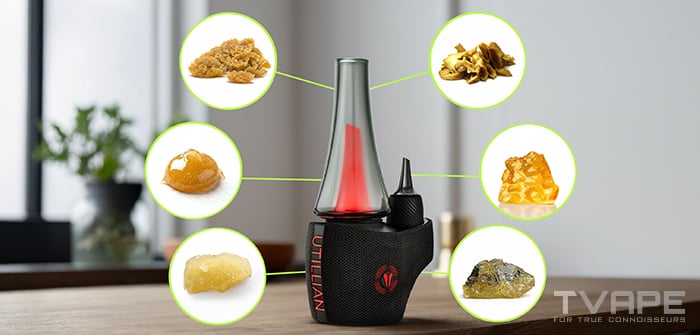
Cannabis concentrates are highly potent extracts of trichome resin (often 60-90%+ THC vs. flower’s 10-25%). They come in two main families: solvent-based (uses butane, propane, CO2, etc.) and solventless (mechanical only — ice water, pressure, screens). Names like shatter, wax, live resin, rosin, etc., mainly describe texture + production method, not automatic quality. Best way to choose: match texture to your device, check lab-tested % numbers, and start low because everything hits harder than flower.
Detailed Breakdown
| Type | Extraction Method | Typical Texture | Flavor Profile | Best Used In |
| Shatter | Solvent | Hard, glass-like | Generally lower quality | Dab Rigs, E-Rigs, Dab pens |
| Budder / Batter | Solvent | Soft, creamy | Strain-specific | Dab Rigs, E-Rigs, Dab pens |
| Sugar / Honeycomb / Crumble | Solvent | Wet sugar or dry brittle crumbs | Strain-specific | Dab Rigs, E-Rigs, Dab pens |
| Live Resin | Solvent | Saucy, badder, sugar, sauce, etc. | Conserves most terpenes | Dab Rigs, E-Rigs, Dab pens |
| Diamonds & Sauce | Solvent | Big THCA crystals in terpene-rich liquid | Terpene-rich, very flavorful | Dab Rigs, E-Rigs, Dab pens |
| Rosin | Solventless (heat + pressure) | Sap-like ? batter ? jam-like texture | Strain-specific | Dab Rigs, E-Rigs, Dab pens |
| Hash (Ice Water / Dry Sift) | Solventless | From loose form to pressed concentrate balls, bricks or oil blocks | Strain-specific | Most Vaporizers |
| Kief / Dry Sift | Solventless | Fine powder | Mild to Low | Almost any concentrate/dry herb vaporizer + joints |
| Distillate | Highly refined solvent | Oil-structured concentrate | Neutral taste, mostly high potency | 510 cartridges, edibles |
| Isolate | Ultra-refined | Powder/crystals | Neutral Taste | Edibles |
Concentrates are one of the fastest-evolving parts of the cannabis market. Popular products like shatter, wax, live resin, and hash, among others, regularly appear on menus, but they are not always used consistently. Production methods keep changing, and the same label can point to products that look and behave very differently. When all you see is a long list of names, it can be hard to understand what you are actually getting and what the concentrate will be like once you open the container.
This guide is here to turn that list into something clear and useful. We break down what the main names usually mean, what different concentrates look and feel like, and which label details are worth paying attention to beyond the name itself. The idea is that, whether you are new to concentrates or already familiar with them, you walk away knowing how to read a menu, how to judge a texture, and how to choose a concentrate that fits the way you want to consume cannabis instead of guessing.
What Are Cannabis Concentrates?
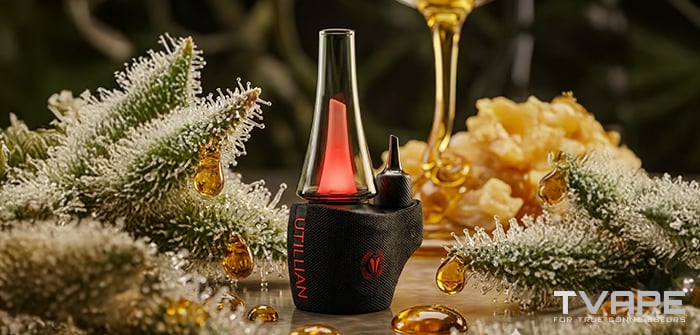
The first question that needs answering is: what does ‘concentrate’ actually mean? Cannabis concentrates are products made by separating the resin-rich parts of the plant from most of the surrounding plant material. Instead of using the full dried flower, concentrates focus on the trichomes, the tiny crystal-like structures that hold cannabinoids such as THC and CBD, along with the terpenes that carry aroma and flavor. The result is a product with these active compounds present at a much higher ratio than in regular bud.
The word concentrate is an umbrella term. It does not describe one single product or texture. It simply means that the plant’s resin has been collected and condensed into a more compact form. That form might be a solid, a thick paste, or a runny oil, but in every case, the idea is the same: more cannabinoids and terpenes in less plant material.
Throughout the rest of this guide, when we talk about different concentrate types, we are always referring back to this same core concept: a product built around concentrated cannabis resin.
What Makes Concentrates Different Than Flower?
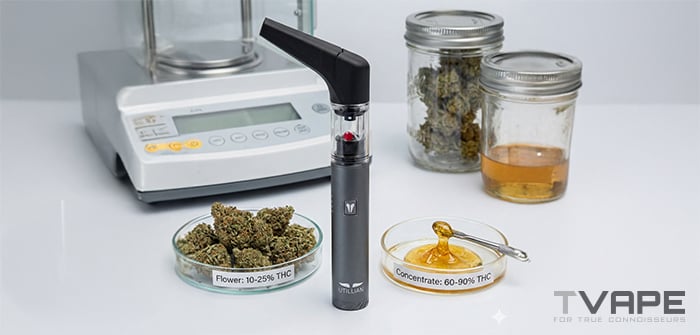
The main practical difference is strength. Regular dried flower usually sits somewhere around 10% and 25% THC by weight, depending on the strain and how it was grown. Many concentrates move into a range that can be two or three times higher, because a much larger share of the material is active resin rather than leaf and plant tissue.
That change in composition also affects how you use them. Flower can be ground and packed into a joint, a bowl, or a dry herb vaporizer, and used directly. Concentrates are usually handled in smaller portions and require different hardware, such as a dab rig, a concentrate-compatible vaporizer, or a cartridge system. A typical serving size is much smaller, but delivers more cannabinoids per inhale.
What is considered a Dab?
In the previous section, we looked at concentrates as a broad category. Within that category, the term dab refers to a specific way these products are intended to be used, and it has become one of the most common words people use when talking about concentrates.
A dab is a small portion of concentrate that is heated on a hot surface or in a heated chamber and inhaled as vapor. The word is used both for the act of consuming the concentrate and for the portion itself. In practice, people use dab almost exclusively for concentrates intended for heating and inhalation, rather than for eating or other uses.
It is important to separate the two ideas. All dabs are concentrates, but not all concentrates are dabs. Some concentrates are formulated for prefilled cartridges, tinctures, or edibles and are never handled as a scoopable portion on a hot surface. When someone says they are taking a dab, they are referring to a concentrate designed to be heated and inhaled directly, which is the group of products most people think of when hearing terms like concentrate, wax, or dab. These can be extracted through most Concentrate Vaporizers or Glass Dab Rigs.
Method of Concentrate Extraction – How Are Concentrates Made?
When you hear terms like shatter, wax, live resin, hash, rosin, they’re all talking about how the resin was pulled from the plant. Almost every concentrate falls into one of two big families: solvent-based or solventless. Solvent-based means a chemical solvent is used to wash cannabinoids and terpenes off the plant. Solventless means no chemical solvent is added.
Both types can be very potent. Neither is “good” nor “bad” by default. What matters is how they’re made, how they’re tested, and what you personally prefer. Now, objectively, we can say that solventless concentrates are generally considered higher quality. Let’s figure out why and how these methods differ, and you can make up your own mind on this.
Solvent-Based Concentrates
Solvent-based concentrates are made by washing cannabis with a liquid or gas that dissolves the resin, then removing that solvent so the extracted oil is left behind. In regulated environments, this is done with closed equipment and controlled purging steps to ensure the final product retains cannabinoids and terpenes while reducing solvent levels to extremely low levels.
Different solvents have different strengths. Hydrocarbons such as butane and propane are very good at pulling both cannabinoids and terpenes and are often used for textured concentrates like shatter, wax, budder and diamonds with sauce. Carbon dioxide extraction is commonly used for thicker oils that will later go into vape cartridges. Alcohol based extractions and further refinement can produce very neutral distillates with high cannabinoid content and less of the original plant character.
Solvent-based does not mean unsafe by default. When concentrates are produced and purged correctly, residual solvent levels are extremely low and fall within legal testing limits. The important distinction is simply that a chemical solvent was used in the process rather than mechanical separation alone.
Solventless Concentrates
Solventless concentrates are made by separating trichomes from the plant without using chemical solvents. Instead, they rely on movement, screens, water, temperature, and pressure to collect and refine the resin. The only things in contact with the plant are ice water, air, filters, and metal or mechanical tools.
Traditional hash, dry sift, and kief all come from knocking or rubbing trichomes off the plant so they fall away from the leaf material. Modern ice water hash takes this a step further by using cold water and agitation to gently break trichomes free, then catching them on a series of fine meshes. Rosin presses start with flower or hash and apply controlled heat and pressure to squeeze the resin out into a soft, stable extract.
Types of Cannabis Concentrates

So far, we have looked at concentrates in general and how they are made. Now it is time to dive into the individual types you actually see on menus and product pages. Names like shatter, wax, live resin, rosin, hash, diamonds, sauce, distillate and others are mostly there to give you a rough idea of how the extract was made and what the texture is like, not to automatically rank one as “better” or “worse” than another.
Two products with the same label can feel completely different depending on the starting material and how carefully they were produced, while very different names can sometimes sit at a similar quality level. When you go through the next sections, keep that in mind. The useful way to read these names is as a quick shortcut for production style and typical behavior: how the concentrate usually looks, how it handles when you load it, and what kind of experience it tends to offer. Quality comes from the input herb and the producer, not from the word on the jar.
Shatter
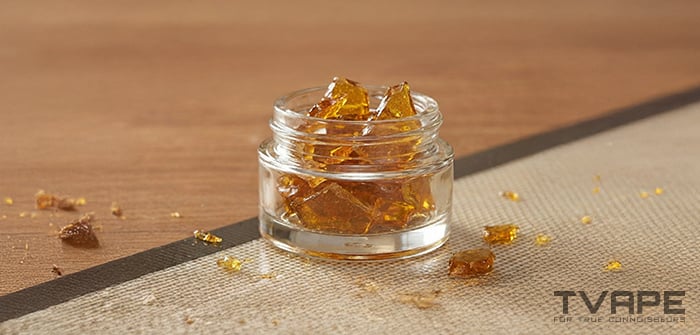
Shatter is a classic example of a brittle hydrocarbon extract. It is usually made by running a solvent, such as butane, over cannabis to extract the resin, then purging the solvent under controlled heat and vacuum until it sets into a thin, glass-like sheet. When it is made well and kept at the right temperature, shatter tends to look clear or slightly amber and will snap or crack when you break a piece off with a tool, rather than bending or smearing.
That firm texture makes it easy to handle in small portions for dab rigs, e rigs, and many wax pens with open-style chambers, though it can be less convenient for very small ovens or pens that only accept soft concentrates.
Wax
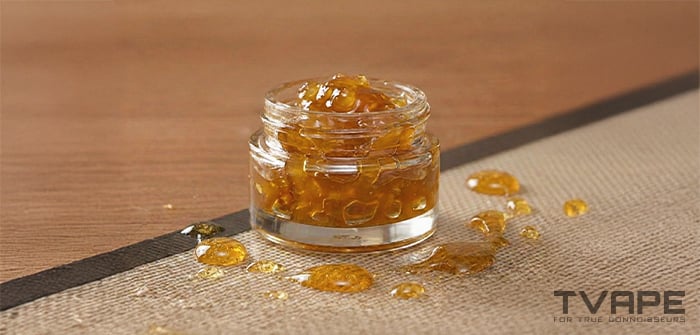
Wax is a term that many people use as a synonym for concentrates. It’s also another umbrella term for a common hydrocarbon-based concentrate, but instead of forming a brittle sheet, it settles into a softer end result. It is usually made in a very similar way to shatter by washing cannabis with a solvent such as butane to pull out the resin, then purging that solvent under controlled heat and vacuum. The difference is that during purging, the extract is handled in a way that introduces tiny air pockets and slightly disturbs the structure, which stops it from setting clear and glass-like. The end result is a product that looks more creamy or crumbly, is usually opaque, and can be found in a variety of textures, but is generally softer than shatter.
That softer texture makes Wax easier to work with for many people, because you can scoop or smear a portion directly onto a dab tool and place it into a banger. It generally behaves well in open-style concentrate chambers and on heated surfaces, and is often treated as a very straightforward dab option you load and inhale in small portions.
Sugar and Honeycomb

Sugar and honeycomb are both hydrocarbon concentrates that fall somewhere between classic shatter and Wax in texture. Sugar or sugar wax is usually made from the same type of extract as shatter, but during curing and storage, the cannabinoids begin to crystallize into small grains suspended in a thicker liquid phase. The result looks like wet sugar or coarse sand in syrup and feels slightly granular when you scoop it. Honeycomb or crumble goes the other way, setting into a dry, aerated slab that breaks apart into light chunks or crumbs when handled. This often comes from a longer purge at slightly higher temperatures or extra agitation that drives off more residual solvents and traps tiny air pockets in the extract.
Sugar is easy to pick up with a small scoop or a shovel-style dab tool and works well in bangers, e-rigs, and open-chamber pens, but it can be messy in cartridges or very tight ovens due to loose grains and sauce. Honeycomb is light and brittle, so you usually break off or crumble a small piece and gently place it into your banger or chamber rather than stabbing at it with a pointed tool. In both cases, you are still dealing with the same basic family of high-potency hydrocarbon extracts.
Rosin
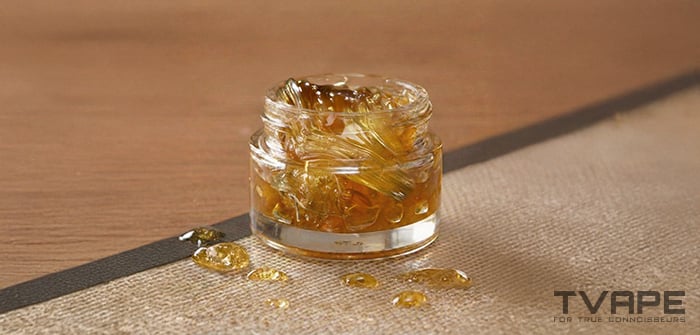
Rosin is a solventless concentrate made by pressing cannabis under controlled heat and pressure so that the resin is squeezed out of the plant material. Instead of using a chemical solvent, producers place either cured flower, dry sift, or hash between heated plates and apply enough force to separate the oily resin from the solid material. The result is a sticky extract that can range in texture from a clear sap to a more opaque, batter-like consistency, depending on the starting material, press temperature, and subsequent handling.
In practice, rosin is treated as a versatile dab concentrate that loads well onto a tool and works with most dab rigs, e-rigs, and Vapor Cups that accept softer textures. Many people reach for it because it can deliver a strong flavor profile with no added solvent step, but, as with shatter or wax, the word rosin mainly tells you how it was made, not necessarily how good it is.
Live Resin
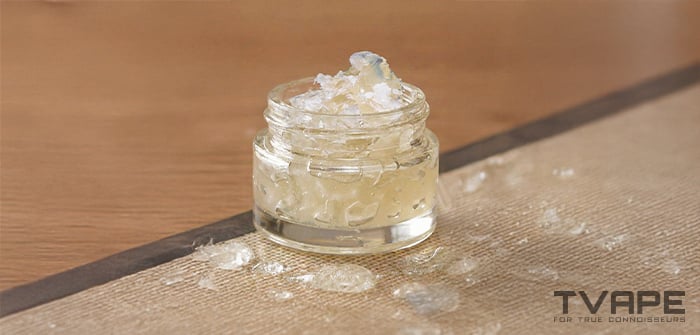
Live resin is a solvent-based concentrate made from fresh frozen cannabis rather than dried and cured flower. Right after harvest, the plant material is frozen rather than hung to dry. Later, producers run a hydrocarbon extraction on that frozen material and carefully purge the solvent. Because the plant was never dried, more of the original terpene profile and light aromatics survive the process compared to many cured material extracts.
The end result is usually a soft, saucy concentrate that can show up as live resin sugar, live resin badder, live resin sauce, or similar textures, depending on how it is finished. In a rig or e rig, live resin behaves like other hydrocarbon dabs. You load a small amount onto a hot surface or into a heated chamber and inhale, but the flavor tends to feel closer to the fresh plant when it is made well.
What you can generally expect from live resin is a concentrate that aims to balance strong potency with a brighter, more complete terpene profile than basic cured material shatter or wax.
Budder or Batter

Budder or batter is a softer, aerated form of hydrocarbon concentrate. It is usually made from the same kind of base extract that can form shatter, but during purging, it is whipped or stirred to introduce small air pockets and encourage a creamy, frosting-like texture rather than a flat sheet. Depending on temperature, agitation, and storage, the end result can range from a smooth, glossy concentrate that spreads easily on a tool to a thicker, cake-batter-style concentrate. It’s also what some people consider “wax”. By now, you understand that the term is used to encompass a ton of types of concentrates, and budder is one of them.
Diamonds and Sauce

Diamonds and sauce are hydrocarbon concentrates where the cannabinoids and terpenes naturally separate into two distinct phases. In most cases producers start with a butane or similar hydrocarbon extract and let it crystallize under controlled temperature and pressure. The majority of the THCA slowly forms hard, glassy crystals that people call diamonds, while the remaining liquid phase becomes a thick, terpene-rich sauce that carries the remaining cannabinoids and flavor compounds. The final product usually looks like a mix of clear or slightly opaque crystals sitting in a golden or amber syrup rather than one uniform texture.
In use, diamonds and sauce behave like a very potent dab concentrate with a strong focus on flavor. The solid crystals need a little more heat to melt, while the sauce begins to vaporize quickly, so most people load a small mix of both onto a tool and place it into a banger or an e-rig chamber.
Hash
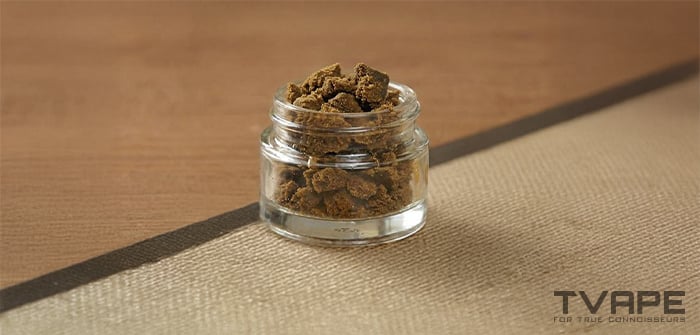
Hash or hashish is one of the oldest forms of cannabis concentrate and also one of the most flexible terms. At its core, hash is resin separated from the plant and collected into a more compact form without the use of chemical solvents. That resin can be collected in different ways, such as dry sifting, ice-water agitation, or hand rubbing, and then pressed or shaped. Because of this, hash can show up as a soft, oily block, a firm brick, a sticky temple ball, a sandy or granular pile of loose resin, or something in between. The word itself describes the family of solventless concentrates more than a single fixed texture.
In practice, that variety of textures means not every hash behaves the same way when you try to consume it. Some traditional pressed hashes are better suited to mixing with flower in a joint or bowl, while modern ice water hash and higher-grade dry sift can be dabbed on a nail, used in an e rig, or loaded into a concentrate-compatible vaporizer if it melts cleanly. As with shatter, Wax, or rosin, the name hash does not automatically tell you whether the product is high or low quality. What really matters is how cleanly the trichomes were separated, how much plant contamination is left, how well it melts, and the quality of the starting herb, which is why you can see both very basic and very refined products all sold under the same hash label.
Isolates
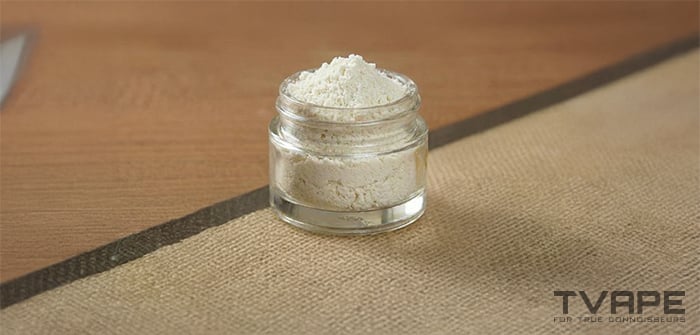
Isolate is a concentrate made to be as close as possible to a single active compound, usually THC or CBD. Producers refine an extract through multiple steps until almost everything except the target cannabinoid has been removed, leaving a product that can reach very high purity. The end result is often a white or clear crystalline powder or small shards that have little to no aroma or flavor of their own. Because it is so neutral and precise, isolate is widely used in tinctures, capsules, measured-dose oils, and many medical or wellness-focused products where consistent dosing matters more than full-strain character.
Unlike shatter, wax, rosin, or hash, most isolate products are not meant to be inhaled directly as dabs. They are designed to be dissolved in carrier oils, mixed into edibles, or taken under the tongue, allowing very precise control over the exact cannabinoid content. This is one of the reasons isolate is left out of many concentrate guides that focus on dab-style textures and vape-friendly formats. It still fits under the concentrate umbrella, but it sits closer to formulation ingredients and medical-style products than to the scoopable concentrates most people load into rigs or pens.
Distillate and Cartridges

Distillate is a highly refined cannabis concentrate that is stripped down to a very concentrated cannabinoid base, most often THC, CBD, or a blend of the two. The goal is consistency. Producers extract and remove much of the “extra” plant compounds, then distill them into a thick, potent, and batch-to-batch-predictable product. That refinement is why distillate usually looks clear to light gold and has a fairly neutral smell and taste on its own.
Because so much of the original terpene profile is removed during processing, distillate is commonly paired with added terpenes to create a specific flavor profile. Those terpenes can be cannabis-derived or botanical, and either way, the end result is usually built around repeatable flavor and strength. Compared to whole plant extracts like live resin or rosin, distillate tends to feel more straightforward and less nuanced, not better or worse, just a different style of concentrate with a different goal.
This consistency is also why distillate is one of the most common concentrate bases used in prefilled cartridges and many disposable weed vapes. In that format, you are not handling a scoopable concentrate, such as wax or shatter. The concentrate is already inside the cartridge, and you use it with a 510 thread battery. Many standard cartridges on the market are distillate-based, but there are also live resin and live rosin cartridges for people who want more of the whole-plant character.
When it comes to carts, the most common ones tend to be Live Resin, Live Rosin carts or CBD carts.
Kief and Dry Sift

Kief and dry sift are good examples of products that many people do not consider concentrates, even though, by definition, they are. Both are made by mechanically separating trichomes from the rest of the plant so that you end up with a loose collection of resin-rich heads rather than full pieces of ground flower. Grinder kief is the simplest version most people know, the fine powder that collects in the bottom chamber after you have been grinding your herb for a while. Dry sift is the same idea done more deliberately by rubbing or shaking cannabis over screens with carefully chosen mesh sizes to catch the trichomes.
Because kief and dry sift remain loose and sandy rather than being pressed or melted into a solid, most people use them as extras rather than main concentrates. They are often sprinkled on top of bowls, mixed into joints, or added as a light boost to a dry herb vaporizer load rather than being dabbed on their own.
How to Use Cannabis Concentrates
Up to this point, we have focused mostly on what each concentrate is and how it looks. The other half of the picture is how people actually use them. Not every texture works well on every device, and the same concentrate can feel very different in a rig than in a pen or a dry herb vaporizer.
Dab Rigs and Electric Dab Rigs
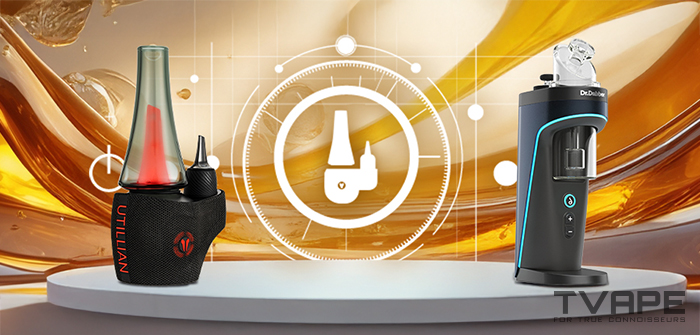
A traditional dab rig is a glass piece with a nail or banger that you heat manually. To get a session started, you simply add a rice gran sized amount of concentrate to the nail and inhale through the glass piece. Electric Dab Rigs take that same idea and build the heater and temperature control into the device, so you set a temperature and let the electronics handle the heat, rather than manually heating the nail with a torch or lighter.
Rigs and e-rigs are the most flexible option for classic dab textures. Shatter, wax, sugar, honeycomb, budder, batter, rosin, and diamonds in sauce all work very well here as long as you load sensible portions and match the temperature to the product. Rigs give you a lot of freedom with temperature and loading style, which is why many people use them as the main reference point when they talk about how a concentrate behaves.
Dab Pens and 510 Thread Batteries
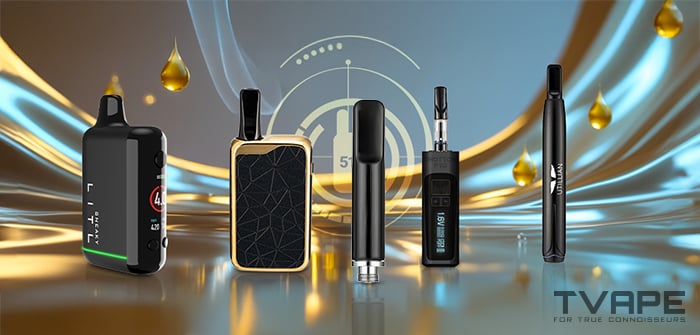
Dab Pens are small, portable devices with a chamber or bucket that you load directly with concentrate. They usually have a simple coil or ceramic cup inside, though newer models may include full-glass or 3D chambers. The process is similar to any other vape; you scoop a small amount of shatter, wax, budder, rosin, or similar textures into the chamber, close it, and inhale while the heater melts and vaporizes the load.
510 Thread Batteries work very differently from rigs, e rigs or dab pens. Instead of loading concentrate yourself, you screw a prefilled cartridge onto a small battery and inhale. Most standard carts are filled with an oil made from distillate with terpenes or other flavorings added back in, rather than the thicker waxes and solid textures you would scoop for a dab. There are also live resin and other specialty oils, but distillate-based carts still make up a large share of what people use. Carts are also commonly sold in CBD dominant ratios.
Dry Herb Vaporizers with Inserts or Pods
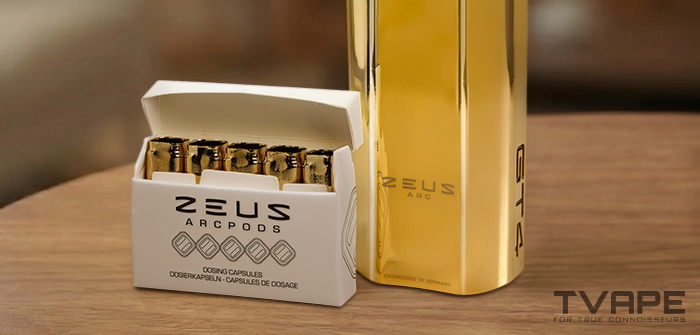
Some Dry Herb Vaporizers include a special insert, pad, or pod for concentrates. You place a small amount of concentrate onto the insert, drop it into the oven, and run a session at a higher temperature than you would for flower. This lets you use certain dab textures in a device you may already own, without buying a dedicated rig or wax pen.
These systems usually work best with more stable textures that do not run everywhere when they melt. Shatter, wax, budder and rosin are generally a better fit than very runny sauce or loose sugar. You also need to be careful with portion size, since overloading can flood the insert and make cleanup difficult. Used correctly, concentrate inserts offer a nice way to switch between flower and concentrates in a single device.
Adding Concentrates to Flower
Another common method is to combine concentrates with regular flower. People sprinkle kief or dry sift on top of a bowl, mix small pieces of hash or crumbled wax into ground herb or paint a thin line of concentrate along the inside or outside of a joint. This adds potency and can change the way the session feels without committing to a full dab setup.
The key is control. Concentrates can easily overpower flower if you use too much, and certain textures can make a joint run or a bowl burn unevenly. Hash, kief, dry sift, and crumbly wax tend to blend more naturally with ground herb than very sticky or liquid textures. This method is popular with users who like the ritual and feel of smoking flower but want to boost strength or add a different flavor layer.
Infusing Oils and Edibles
Concentrates are not only for inhalation. Many people use them as ingredients in homemade oils and edibles, especially when they want consistent dosing without using a lot of plant material. In this context, the concentrate is mixed into a fat or recipe rather than loaded into a rig or vaporizer.
Rosin, distillate, and isolate are the most common choices for infusions. Rosin brings some of the strain’s character and can add noticeable flavor to an oil or butter. Distillate is very strong and relatively neutral, making it easy to blend into almost any recipe without altering the taste too much. Isolate is used when someone wants very precise cannabinoid content with almost no extra flavor at all. In all three cases, the concentrate is gently warmed with a carrier oil to dissolve evenly, then the infused oil is used in food, capsules, or taken on its own.
The experience from edibles and infused oils is very different from inhaling the same concentrate. Effects take longer to start, can feel stronger at the same milligram amount and usually last much longer. That can be useful when you want sustained relief or a long session, but it also means careful dosing and patience are important, so you do not accidentally take more than you need. This guide focuses mainly on inhaled concentrates and devices, but it’s worth noting that some of the same products can be used in the kitchen as well, as long as you treat their potency with the same respect and adjust portions accordingly.
Choosing the Right Concentrate
Choosing a concentrate is less about chasing one perfect product and more about matching what you buy to how you plan to use it. The same concentrate can feel very different depending on the texture, the way you heat it, and how much attention you give to flavor versus simple effect.
The first thing to think about is the method you actually use. That can be a glass dab rig with a banger, an electronic rig, a portable vaporizer, a wax pen, a five ten battery with prefilled carts, or simply mixing concentrates into flower. As long as a concentrate can safely handle the temperatures your setup reaches and will not leak inside the hardware, you are in the clear. From there, it becomes a question of texture and what is practical to handle.
Potency is the next piece. Concentrates are generally much stronger by weight than dried herb, but strength is not tied only to the type of concentrate. A wax, rosin, or live resin can all sit at similar THC levels, and a product with a more modest name can still be very strong. The most reliable way to judge how intense a concentrate is likely to feel is to look at the numbers on the package and compare them to what you are used to. If you mostly use flower around a certain percentage and move to a concentrate that is two or three times higher, you should treat it with respect regardless of the texture. Labels are your friend here. If you pay attention to THC, CBD, and total cannabinoids, you can adjust your portion size instead of guessing based on the type alone.
Budget and concentrate quality are also connected to how you should use what you buy. In broad strokes, solventless products and many live concentrates cost more to produce and therefore sit higher on the shelf. You can absolutely put an expensive rosin into any device that can technically vaporize it, and it will still work.
The difference is that simple coil-based pens and very basic setups tend to mute flavor and offer less precise temperature control. If you are paying a premium for complex terpene profiles and very careful processing, you will get more out of that investment if the way you heat it also shows that flavor. People who care most about taste and nuance usually lean toward precise E Rigs and vaporizers designed to bring out flavor. If you mainly care about strong effects and big clouds, it is completely fine to use more budget-friendly hardware and mid-range concentrates, as long as everything is compatible and safe.
Storage and Maintenance
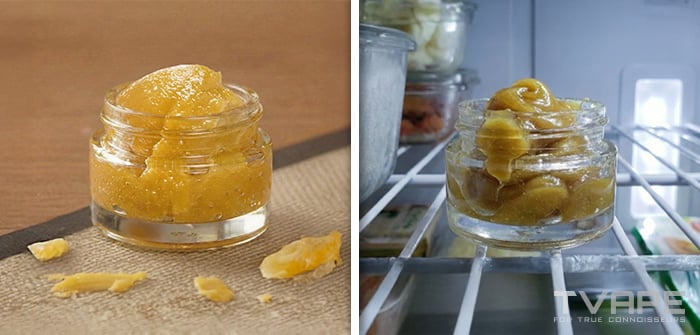
How you store and maintain concentrates has a big impact on flavor, texture, and smoothness over time. Even strong products can lose a lot of their character if they sit in warm light or in the wrong container.
Cleanliness is another very important factor in ensuring your concentrate feels and tastes as pure as possible. A dirty bubbler, chamber, or mouthpiece can drastically affect the quality of your vapor.
First things first, when it comes to storing your unused concentrate, the main goal is to keep air, light, and unnecessary heat away from it. Here is a general guideline for your different types of concentrates:
- Shatter and honeycomb: Small glass jars or silicone-lined containers with a tight lid work well. Store flat pieces of shatter in parchment inside a jar so they do not stick to the glass.
- Wax, budder, batter, sugar, and rosin: Thick glass or high-quality plastic jars with a wide opening make it easier to scoop without smearing product on the walls. Avoid very tall and narrow containers that force you to dig deep with the tool.
- Diamonds and sauce: Short, wide glass jars are best. You want enough room to scoop both crystals and sauce without spilling. Keep the lid clean so it seals properly.
- Hash, kief, and dry sift: Use small airtight jars and avoid handling with bare fingers. For loose kief and dry sift, treat them like a fine spice keep them in the dark and away from moisture.
Fridge Versus Room Temperature
Room temperature is fine for short-term use as long as concentrates are kept in a dark drawer or cupboard away from direct sunlight and heat sources.
A fridge can help slow terpene loss and oxidation when storing concentrates for more than a few weeks, especially for live products and rosin. Keep jars sealed in a small container or bag so they are not exposed to moisture and fridge smells.
A freezer can be useful for long storage of sealed jars, but you want to avoid constant temperature swings. If you use the freezer, let the jar return to room temperature with the lid closed before opening to reduce condensation. The more often you open a jar and expose it to warm air, the less benefit you get from cold storage, so it makes sense to keep daily use products at a stable room temperature and reserve fridge or freezer space for backup jars.
How Long Concentrates Usually Keep Their Quality
There is no exact expiration date, but there are general patterns. Most hydrocarbon concentrates shatter, wax, budder, sugar, and honeycomb stay in good shape for several months when stored well, with flavor slowly dropping before potency does.
Solventless products like hash and rosin can hold quality for a similar time, but are more sensitive to temperature, light, and oxygen. They benefit more from cool, dark storage.
Distillate tends to be quite stable in sealed carts and syringes and can feel almost unchanged for a long time, though added terpenes can still fade.
Kief and dry sift can sit in a jar for a while, but they will slowly lose aroma and can feel harsher if they dry out completely. In most cases, flavor and smoothness decline before raw strength does. A concentrate that is a year old may still be strong, but it will rarely taste as fresh as it did in the first few months.
Cleaning and Maintenance
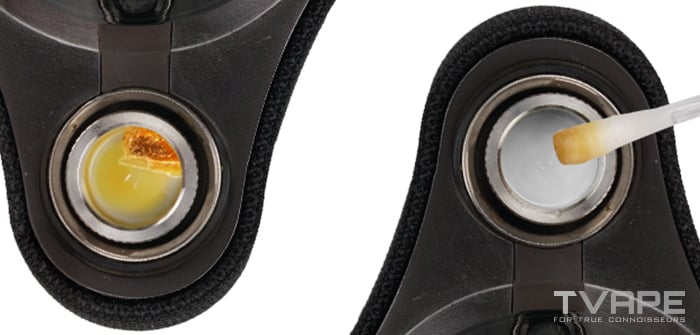
Keeping the device you use to vaporize concentrates clean is one of the biggest factors in preserving purity and flavor. Since every device is a little different, the exact routine can vary, but the goal stays the same: prevent buildup that can affect taste and performance.
Most dab pens are straightforward to maintain. A quick wipe with a cotton swab and isopropyl alcohol every few sessions is usually enough to keep things running smoothly. For the full step by step process, check out our How To Clean a Dab Pen guide.
Wax pens come in a wider range of designs, so how often you clean and how detailed the routine needs to be can vary a bit by model. That said, the same core cleaning principles apply, so once you understand the basic process, you can adapt it to most wax pen setups.
E rigs are generally bulkier than dab pens and often need more frequent cleaning. Because they tend to deliver clearer flavor, it is easier to notice when residue starts to affect taste. If you need help, check out our How To Clean an E Rig guide.
Pros and Cons of Cannabis Concentrates
Pros of cannabis concentrates
- Higher cannabinoid content per gram than most flowers.
- Can deliver very clear strain flavor and terpene expression, especially with good hash, rosin, or live products.
- Wide range of textures and formats so you can match concentrates to different devices and session styles.
- Compact and easy to store or transport compared to carrying the same effect level in dried flowers.
Cons of cannabis concentrates
- Much higher potency than the flower makes it easy to overshoot your comfort zone if you are not careful.
- Quality varies widely between producers, and poor processing can leave behind contaminants or harsh residues.
- Some textures are messy to handle and can leak, spill, or gunk up devices more than simple dry herb.
- Often, more expensive per gram at the counter, and premium solventless or live products can be a significant cost, even if they stretch further per session.
Cannabis Concentrates: Our Final Notes
At the end of the day, concentrate names are mostly shortcuts for how something was made and what it looks and feels like, not a built-in quality score. Shatter, wax, live resin, rosin, hash, diamonds, distillate, and everything else can all be great or terrible. What actually matters is the herb that went in, how carefully it was processed, and how it has been stored.
All concentrates are stronger by weight than dried flower, so labels matter more than names. Look at the THC, CBD, and total cannabinoids. Start with a smaller amount than you think you need and give it time to hit before you go back for more. Match the texture to how you plan to use it. Hard pieces are easiest on open heated surfaces, soft scoopable textures are the most flexible, runny oils belong in proper carts or larger chambers, and loose powders like kief are usually best mixed with flower. Wherever you land, buy products with real lab tests, keep them sealed away from heat and light, and treat the extra strength with respect. If you keep those few points in mind, concentrate menus become much easier to read and much less confusing.
We hope this guide was useful for you, and as always, keep vapin!